Showing posts with label Nikon D3. Show all posts

Monday, August 12, 2013

Pic of the Day


     Under the Sea?  A police officer on Marathon Key, Florida, patrols the streets in front of this under sea mural on the side of a K-mart.  I found it strangely interesting.

Nikon D3, Nikor 24mm f2.8, 1/640 second @ f8, Handheld

Tuesday, August 6, 2013

Pic of the Day

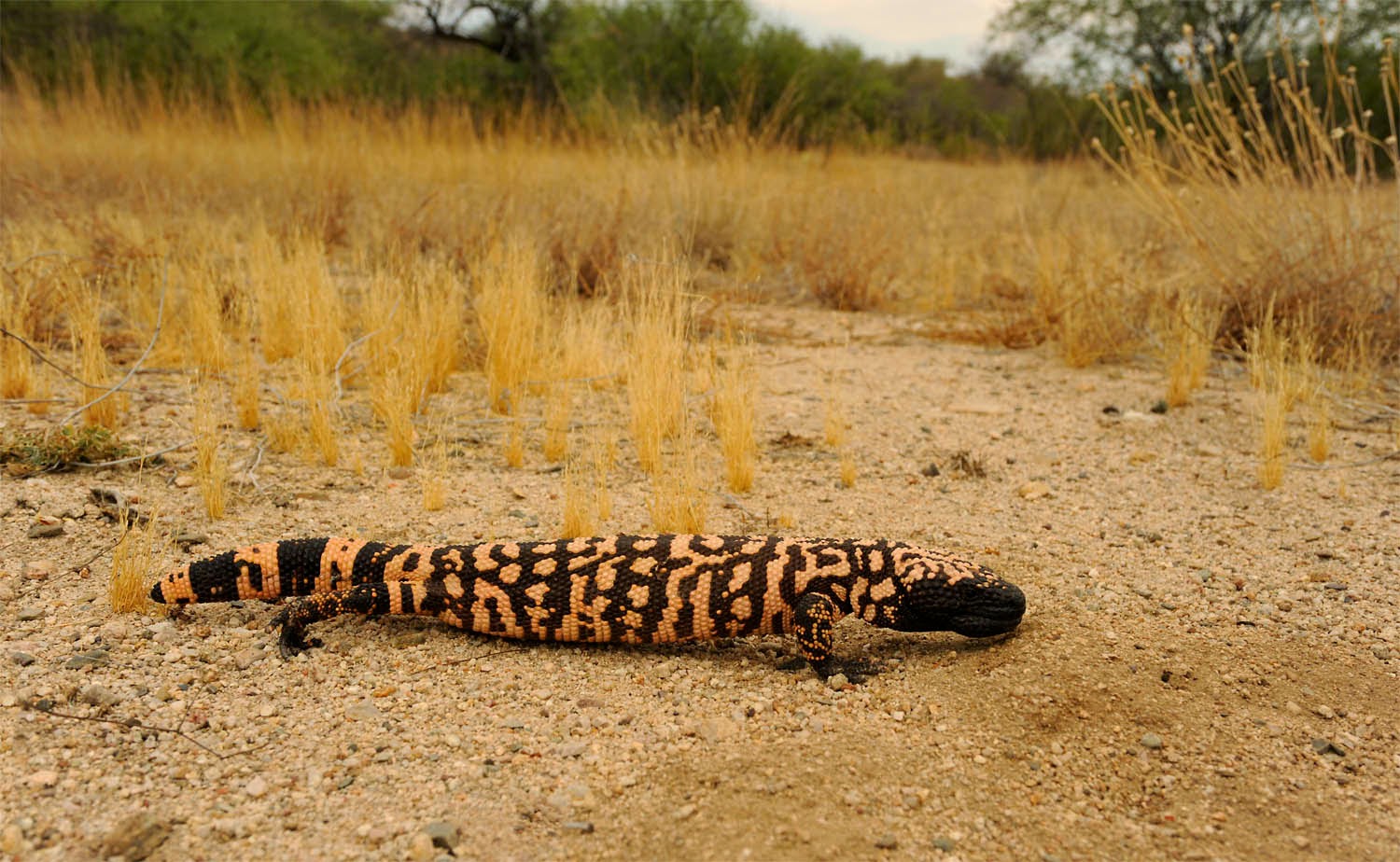
Gila Monster, Heloderma suspectum: Catalina State Park; Tucson, Arizona
     I was at the entrance of Catalina State Park photographing birds when I stopped and talked with an on duty volunteer about the birds.  I mentioned that a Ladder backed woodpecker was feeding of Saguaro Cactus fruit and then began to point out other birds right there around the office. 
     After talking for a few minutes, the volunteer said, “there is someone here who would love to talk with you.”  She stepped back inside the office made a phone call.  A few minutes later Jim Cloer, the parks volunteer naturalist, and better known as the “snake man,” drove-up. 
     Jim introduced himself and we immediately began talking about the birds and other wildlife in the park.  Jim invited me up to his office where the educational examples of all the reptiles in the park are kept.  Before entering Jim told me that he had a couple of snakes that roamed free in his office to take care of any mice problem.  I told him, "no problem."  I’m just glad there were no frogs roaming free.  I just don’t care for frogs!
     For me the high light of the meeting was the Gila Monster.  I had never seen one in the wild, or photographed one, so I was ecstatic when Jim offered to let me take a few photos.
Jim, a pro reptile handler, with ease picked-up the Gila Monster and set it on the ground so I could take photos.  I got right down on the ground with the reptile and used a wide angle lens to capture the Gila Monster and its desert environment.
   My visit with Jim was one of my best trips to Catalina State Park, I really enjoyed the behind the scenes tour, Thanks Jim!

Nikon D3, Nikkor 24-85, f3.5-5.6, set to  34mm focal length  1/400 second @ f 9, Hand held


Jim Cloer, (left) and  Bobby Harrison (right)

Sunday, August 12, 2012

Pic of the Day


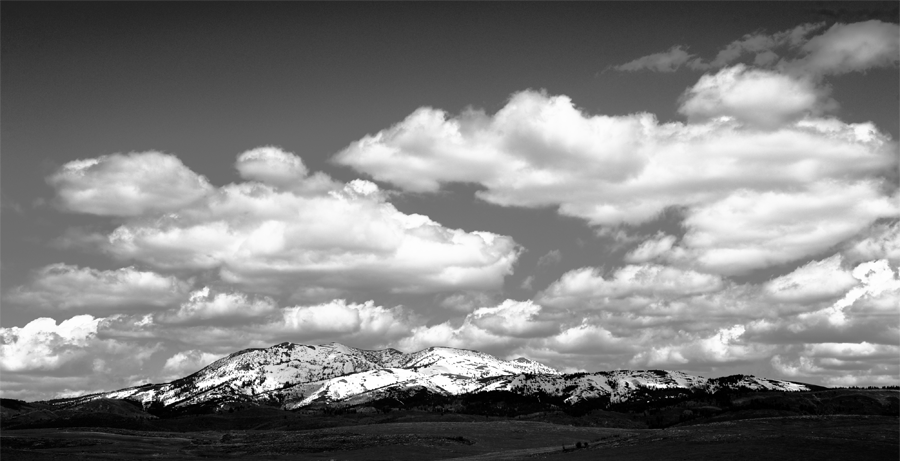
     Strawberry Peak – Socorro, New Mexico:  Water Canyon is a remarkable location for birding and I was anxious to get there.  I arrived at Socorro, New Mexico a few hours before sunset, so I headed up highway US 60 toward Water Canyon.  Just as I started the climb up the canyon I spotted a Lark Sparrows; a lifer for me.  This was great, but the weather was not!  Dark clouds were moving in fast and a slight drizzle ensued. 
     I continued up the mountain and added a few more birds to my trip list when the drizzle turned into a light rain.  The clouds continued to grow darker and darker and the threat of a hammering rain seemed imminent. Not wanting to be on a mountain dirt road in a downpour I turned around and headed down the mountain. 
     I made my decision just in time.  As soon as I reached the bottom of the mountain a horrific hale storm hit.  The hale varied from a half to an inch in diameter, and falling thick.  Fearing that the hale would damage my van I pulled off the road and waited for it  to stop.
     After what seem to be forever the hale did stop, and that gave me the opportunity to shoot this landscape of Strawberry Peak before a torrential rain began falling.  The break was only a minute or two, and the image was shot through the open drivers side window of my van.  No sooner had I taken a few shots of the ominous clouds did the bottom literally dropped-out.  Again, I stayed put, for the rain fell so hard I could not see to drive.
Getting off the Water Canyon mountain dirt road when I did was a good call.  On occasion I do listen to myself!

Nikon D3, Nikkor 24-85mm, f3.5-4.5, 1/640 sec. @ f9, Handheld through van window.

Original in color and converted to black and white in photoshop

Tuesday, November 29, 2011

Pic of the Day


     Common Egret on Nest – Saint Augustine Alligator Farm; Saint Augustine, Florida:  While strolling along the boardwalk at the alligator farm I found a great angle on this egret nest.  When I spotted the nest the adult was absent, but soon after setting-up the camera the adult arrived.   Expecting food, the nestlings that had been docile and inconspicuous, leaped up and began begging for food.  Once the nestlings discovered there was no food they stood still long enough from me to get a shot with sufficient depth of field to keep both the adult and nestlings sharp.

Nikon D3, Nikkor 500mm f4,  1/200 second @ f6.3

Sunday, October 2, 2011

Pic of the Day


     American Avocet – Bear River National Wildlife Refuge: Bear River NWR is one of the best places I have found to photograph avocets. This Avocet (top photo) was photographed within fifteen of the road that leads to the refuge entrance.  High water pushed many of the birds close to the road this year making them easy to photograph. 
     Because much of the birds nesting habitat was submerged some avocets nested right up to black-top on the gravel shoulder (bottom photo).  I saw this bird as I drove along the road.  After seeing it, I turned by van around and pulled the driver side along the edge of the black-top and stopped right beside the bird.  Confident in its camouflage the avocet set perfectly still.  I shot a burst of four images then pulled away leaving the avocet to its incubation duties. 


Top Photo:       Nikon D7000, Nikkor 500mm f4 ED  ifvr, 1/800 sec. @ f6.3, Handheld on beanbag
Bottom Photo:  Nikon D3, Nikkor 24-85mm, Exposure 1/1,250 sec. @ f5.6, Handheld

Tuesday, September 27, 2011

Pic of the Day

Herring Smokehouse


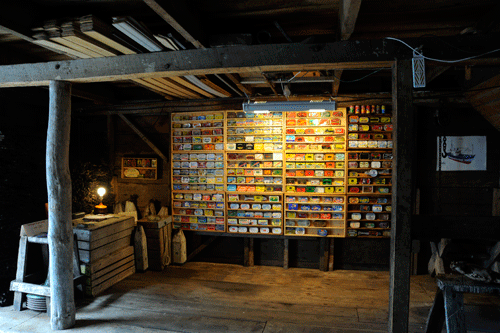
Cans of Sardines - The last can of Sardines
 packaged at Seal Cove is displayed.


     Sardine Museum and Herring Hall of Fame:  While driving south to Seal Cove on Grand Manan Island this summer I “saw a sign, “Sardine Museum and Herring Hall of Fame.”  My first thought……Herring Hall of Fame?”  Well, indeed!  At Seal Cove I saw directions to the Sardine Museum and Herring Hall of Fame.  With a name like that I had to stop.  I made the turn, and pulled into a open spot beside a run downed building. 
     I wasn’t really sure if I was at the museum or not, but was soon greeted by a young woman who began to tell me about the museum.  Herring fishing and sardine canning was part of the Seal Cove economy until the early 1990.  At that time the herring fishing came to halt, and thus the end of sardine canning in Seal Cove. 
     In the late 90’s the buildings and were bought by Michael Zimmer from New York City.  Zimmer founded the museum to preserve this part of Grand Manan’s history.  I found the museum to be quite fascinating.  The artifacts used in the sardine canning process that had been arranged by Zimmer made for an interesting photo opportunity.
     By the way, at its height the Seal Cove sardine factory produced a million 10 and 18 pound boxes a year.   Eighty percent of the world's smoked herring was produced at Seal Cove.  To learn more about the museum follow this link:

http://www.redgage.com/blogs/bikermom/a-man-a-can-a-plan.html

Saturday, August 27, 2011

Pic of the Day


     Fern – Sarett Nature Center; Benton Harbor, Michigan:  It was at Sarett Nature Center some 34 years ago that I honed by skills as a nature photographer while attending Andrews University in Berrien Springs, Michigan.  I spent many hours walking the numerous trails and boardwalks photographing everything I could get my camera on.  Since those days of long ago I have moved far from Sarett; yet, I return as often as I can. Over the last three years I have made two trips to the preserve and had the opportunity to walk its trails to photograph its abundance of birds and lush flora.
     This image was photographed along a trail that skirts Sarett’s immense wetlands.  Ferns are abundant, lush and full within the preserve, and this fern beckoned to be photographed.  The soft, subdued light under the forest canopy was perfect for the shot, but it also meant a tripod would be essential.  I positioned the camera and tripod over the select area and used the zoom lens to compose the image.
     Though I shot the original image in color, and the subtle green values created the image I had envisioned, I saw more.  Using photoshop I dropped the color from the image and adjusted the tonality using the curves settings.  Coming from a black and white film and print background I found the black and white conversion much more appealing.
     I have posted both the color and, black and white image for you to compare.  Which to you prefer?


Nikon D3, Nikkor 24-85mm zoom set to 66mm focal length,  Gitzo Tripod with Arca Swiss monoball head,   1/4 second @ f14

Monday, August 8, 2011

Pic of the Day


     Thunderstorm over Fort Myers Beach from Sanibel Island Causeway -- Florida:   Summertime in Florida is a great time and place to photograph thunderstorms. I shot this image from one of the spoil islands on the causeway to Sanibel Island.  The view from the spoil island is looking northeast over San Carlos Bay.  The image was originally shot in color and converted to black & white in photoshop.

Nikon D3, Nikkor 24-85 zoom-set to 24mm, 1/500sec. @ f10, Handheld

Sunday, June 26, 2011

Who's Looking

     I would like to thank the viewers from the Dominican Republic for logging onto Bobby's Photo Blog.  The Dominican Republic becomes the 86th country from which viewer have logged on.  Welcome to the Blog and please log on often.  Bobby

Saturday, June 25, 2011

Pic of the Day

     Caribou Mountain, Idaho:  As I drove north to Yellowstone after leaving the Bear River Refuge I took a route that led through the high valley of Gray’s Lake National Wildlife Refuge.  The Refuge is the nesting grounds of about 1,200 Sandhill Cranes and the rare Trumpeter Swan.  Unfortunately I did not have time to visit the refuge, but I did take the time to shoot this scenic of Caribou Mountain which is just one of the majestic views from Gray’s Lake. 
     Caribou Mountain is a massive chunk of granite that rises 9,803 feet above sea level and is famous for its placer gold deposits that were discovered in 1874.  Though gold is no longer mined at Caribou Mountain,individuals can still pan for gold in the mountains streams.  But, that is not the reason I want to return to Gray’s Lake.  For me it is the cranes and swans, they are much more valuable.


Nikon D3, Nikkor 24-85mm zoom set to 48mm, 1/1,250 second @ f10, ISO 200

Thursday, June 23, 2011

Pic of the Day


     Grand Tetons and Field of Dandelions – Teton National Park, Wyoming:  Driving along Antelope Flats Drive in Grand Teton National Park, I found this field of flowering dandelions.  The yellow flowers provided the perfect foreground for an image of the Grand Tetons and blue sky.   Walking among the flowers I found a spot with the greatest density of blooms and chose it as my foreground for the photograph.  I attached my camera to a tripod and lowered the camera until it was about 18 inches off the ground allowing the expanse of flowers to fill the foreground space.  I used a small aperture to create an extended depth-of-field which provided a sharpness from the flowers in the foreground to the mountains in the distance background.  The yellow flowers, stretching to the foothills is the perfect complement to the blue sky that frames the mountains.  Some days you just get lucky!

Nikon D3, Nikkor 24-85mm zoom set at 55mm, 1/100 sec @ f22

Monday, June 13, 2011

Pic of the Day


     Tabletop formation – Kremmling, Colorado:  I took the scenic route to Bear River Migratory Bird Refuge after leaving Rocky Mountain National Park.  The route took me through Kremmling, Colorado.  Just outside the north end of town I saw this fascinating mountain.  Its formations were captivating and I just had to shoot some images.  This is one of my favorites.  More images to come!

Nkion D3, Nikkor 24-85 zoom, set to 34mm, 1/1000 sec. @ f7.1

Tuesday, April 26, 2011

Pic of the Day


  American Alligator -- Alligator Farm; Saint Augustine, Florida: So, I spent three days photographing herons and egrets at the alligator farm.  I would have been remiss had I not taken some alligator photos as well.  After all, I was at an alligator farm.
   I shot this image of two alligators lounging on the waters surface near the boardwalk that I worked from to photograph the nesting birds.  I have spent many, many hours over the years in swamps and have had many encounters with alligators.  It is easy to become complacent and lose a true sense of fear of the animals.  Most all gators I see are lying around riverbanks and lakeshores basking in the sun, or lazily floating in the water.   At the alligator farm I was reminded of just how wild and dangerous gator really are.
   I just happened to be looking in the right direction, at the right time to see the action.  A Snowy Egret was walking along the shoreline of the pond that held the hundred or so big gators of the farm.  The egret seemed cautious, keeping its distance from the gators basking on the shore.  However the distance was not great enough.  Like lighting a gator sprang from its illusion of slumber and grabbed the egret before the bird was able to raise a wing.  In an instant more than half a dozen gators converged at the point of action, but it was too late for them, and the egret.  In a fraction of a second only the yellow feet of the Snowy Egret were visible protruding from the gape of the gators mouth.   Nature had reminded me not to be complacent, but to always be vigilant when in the wild, or in this case in a popular tourist attraction where the wild was brought to me.

Nikon D3, Nikkor 24-85 set to 85mm, 1/125sec. @ f9

Saturday, March 26, 2011

Pic of the Day

     American Egret – Gatorland; Orlando, Florida:  In January a friend, who lives in Florida told me of the egret rookery at Gatorland.  Gatorland is a major tourist attraction who’s major draw is the American Alligator.  Yes, Gatorland host thousands of gators.  Some of the big ones live in the large natural (looking) ponds.
   In nature herons and egrets naturally nest above gator holes, as gators serve to protect the nesting birds from marauding coons, opossum and other predators.  The ponds at Gatorland provide the perfect nesting habitat for wading birds, and they come to nest by the hundreds.
   This American Egret, in its beautiful nuptial plumes stands over its nest and eggs to preen and adjust feathers before returning to incubation duties.  It was in a perfect location as the evening grew on.  The sun lighted the egret from behind rendering the delicate aigrette plumes in exquisite detail.  It was the delicate aigrette plumes that almost brought the American, and other egrets to near extinction a hundred years ago.  The fanciful plumes were in high demand at the turn of the twentieth century as a fashion accessory for women’s hats.  Fortunately the Audubon Society foresaw the consequences of the plume trade and dispatched wardens and legislation to halt the destruction of these elegant birds.

Nikon D3, Nikkor 80-200mm f2.8, Digital Capture @ ISO 200, 1/400sec. @ f5.6

For more information on Gatorland, log onto their website at:   http://www.gatorland.com

Monday, February 7, 2011

Pic of the Day

   Glassware – Studio Photography: I have been a wildlife and nature photographer for more than thirty-six years, and those who know me know that I am most passionate about birds.   However, my specialty in my undergraduate degree was studio photography, specifically portraits.  Before I started teaching full time, 19 years ago, I operated a studio and made part of my living shooting portraits and products.
   I spend so much time shooting birds these days that I do not get into the studio very often.  So, when I teach a studio class it gives me the opportunity to do demonstrations that allow me explore subjects and create images.  This semester I am teaching a studio photography class.  The first few assignment introduce my students to lighting and its effects through photographing simple subjects.  As the semester progress lighting and subject matter become more complex. 
   I shot this image as a demonstration on how to illuminate a simple object with a single light source.  The image is a close-up of a glass vase.  A single light shinning through seamless white paper illuminates the vase, creating a black line that divides the image with a graceful curve.  The simple object becomes a study in texture, form, shape, and tone; the essence of studio lighting.
   My students have already started shooting the assignments and are producing some very creative works. I will share some of their work on this blog in future post.

Nikon D3, Nikkor 80-200 f4, Digital Capture ISO 200,  1/200 sec. @ f22

Wednesday, August 4, 2010

Pic of the Day


     Cornus canadensis (Bunchberry) -- Bonaventure Island, Quebec: While hiking to the gannetry on Bonaventure Island (see post for July 12, 2010) this past June, I found this patch of Bunchberry along the trail. As soon as I saw the patch of flowers I thought of Eliot Porter, the master of 4x5 format color nature photography. Porter, in my opinion was the best bird photographer that has ever lived. In fact, if you are a nature photographer you are following in the footsteps of Eliot Porter. He pioneered the use of color nature photography. He is also well known for his exquisite detailed nature close-ups and landscapes. His book, In Wilderness is the Preservation of the World, was the first oversized coffee table book. Porter’s work inspired a new genre of photography, and future generations of nature photographers.
     As I looked at the scene it beckoned to be photographed. Though I was in a hurry to get to the gannetry I could not pass this exquisite Lilliputian landscape. I use a tripod for almost all my shots. This image required a tripod because I was shooting for an extended depth-of-field to keep the entire scene in focus. Using the depth-of-field preview button I determined an aperture of f/18 would give sufficient depth to the image. The shutter speed dropped to 1/13 of a second, thus the need for the tripod. I shot a few images, and was very pleased with the results. In no time I was back on tract to the gannetry.

For more information on Eliot Porter go to:
http://www.cartermuseum.org/collections/porter
http://www.utata.org/salon/19594.php

Nikon D3, Nikkor 24-85 zoom set to 48mm, Digital Capture, ISO 200

Saturday, June 26, 2010


Teton Mountain Range – Teton National Park, WY: Driving north out of the Teton National Park I encountered this view of the mountains to our west. The light was in and out as the clouds moved across the sky sometimes illuminating the foreground, mountains or sky. This shot was made as the foreground and mountains were lighted against a dark sky, adding drama to the image.
Nikon D3, Nikkor 24-85mm lens, Digital Capture, ISO 200

Wednesday, March 24, 2010

Pic of the Day

     Sunrise, Goldsmith-Schiffman Nature Sanctuary: So much of my photography takes place hundreds of miles from home, simply because my day-to-day duties at the university keeps me quite busy. But, this sunrise at Goldsmith-Schiffman Nature Sanctuary in Huntsville, Alabama was taken about seven miles from where I live. As I was driving into work one morning before sunrise, I noticed a fog hovering over the low-lying fields and wetlands. Taking advantage of the fog, I drove to the sanctuary and set-up my tripod and pointed my camera in the direction where the sun would rise over the eastern mountains. As the first light of the sun broke over the mountains, the wetlands turned gold as the sunlight illuminated the fog. After shooting a series of photos of the rising sun, I was back on the road heading to school. The important lessons learned – always have your camera with you, and know enough about the home-front to know where to go when opportunities arise. Oh yes, one more – you don’t have to travel hundreds of miles from home to take good photos.
This image is a digital capture on a Nikon D3 camera using a 24-50mm Nikkor zoom lens set to a 45mm focal length.