Showing posts with label Oakwood University. Show all posts

Wednesday, October 8, 2014

Pic of the Day

Toklat River, Alaska
     I shot this image 34 years ago when I made my first tirp to Alaska.  I must say that, that first trip was my favorite.  My wife and I drove from Berrien Springs, Michigan; it was a round trip of over 13,000 miles.  We were young and everything was new and exciting.  If my memory serves me right, I shot this image of the Toklat River from (near) Polychrome Pass in Denali National Park.  The mountains in the background are part of the Alaska Range.
     I printed this image today as a demo for my Fundamentals of Photography class.  Because of the extended tonal range between the sky and the landscape, this image required lots of dodging and burning to properly print.  This is the first time I have printed from this negative, and I am quite pleased with the results.  In this age of digital imaging, I still love working in the darkroom and watching the silver image form on the photographic paper.  It truly is "writing with light."

Mamyia 645 1000s, 110mm lens, Exposure Unknown, Verichrome Pan Film

Lunar Eclipse


October 8, 2014,  Lunar Eclipse (partial phase)
shot from the campus of Oakwood University.
This image was shot through a thin layer of clouds

     I was up early this morning to photograph the total lunar eclipse, but the weather was not very cooperative.   I arrived on the campus of Oakwood University, (where I teach) where I shot this image.  The weather was very cloudy at my house, but was supposed to be better further west.  When I arrived on campus the sky was much better. However, soon after taking this image, the sky worsened, and the remainder of the eclipse was obscured by clouds.    Perhaps I will have better luck in April, 2015

Nikon D800, Nikkor 500mm F4, 1/800 second f6.3;  Camera set to DX format

Saturday, September 21, 2013

Pic of the Day


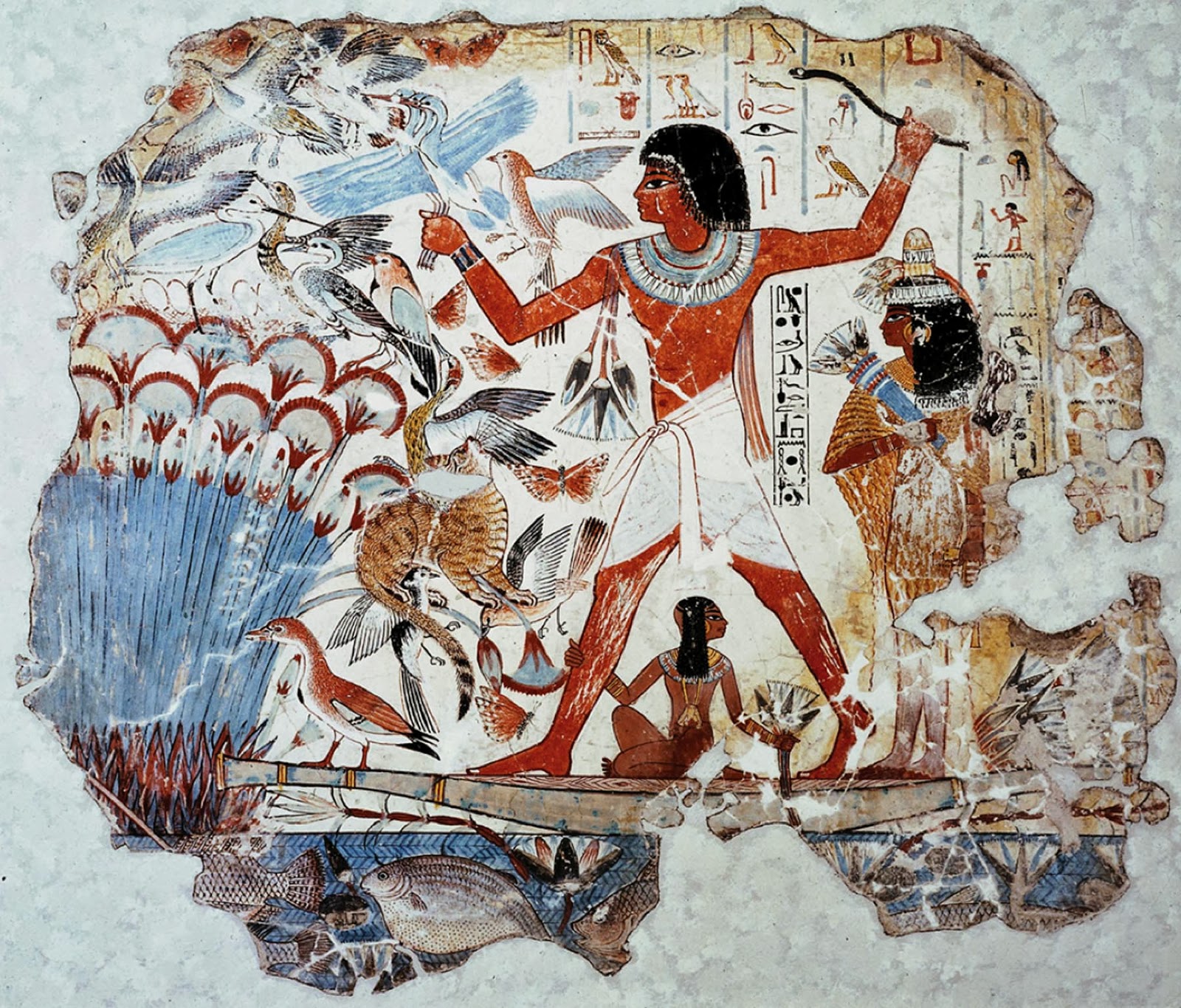
Nebamun Fowling in the Marshes
New Kingdom tomb fresco-secco, c. 1350 BC
      The first time I saw an Egyptian goose was in an art history book.  The image was a reproduction of the “fowling” or hunting scene from the tomb of Nebamun, a “scribe and counter of grain”. Nebamun means, “My Lord is Amun,” and he lived around 1350 BC.  Hunting scenes are somewhat common in Egyptian tomb art, and it seems that Egyptian Geese were a frequent target of the fowler.  In the above scene, an Egyptian Goose is seen at the front of the boat.

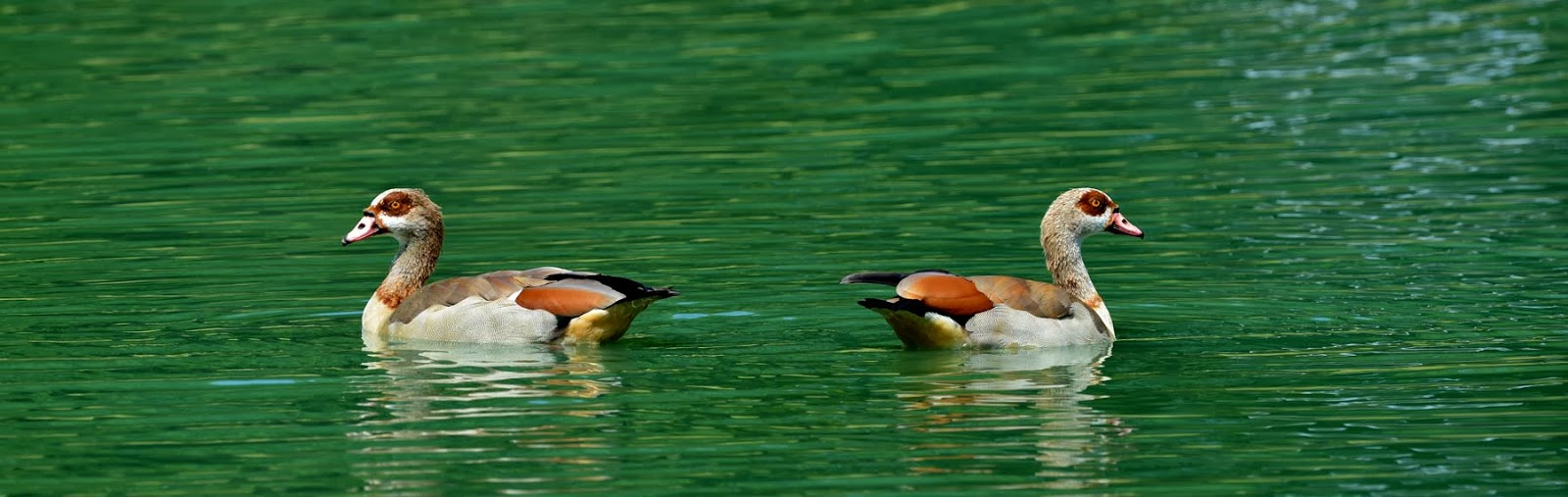
Egyptian Goose, Alopochen aegyptiacus;
Photographed on the campus of Oakwood University in Huntsville, Alabama
     I shot these images at Unity Pond on the Campus of Oakwood University.  About a week-and-a-half ago, one of the grounds keeper told me he had seen a couple of unusual geese mixed with the local population of Canada Geese.  As I drove from class to class over the following days I looked for the weird geese, but did not see them.
     Last Sunday, while bird watching with one of my students he told me he had seen what he thought were Egyptian Geese at one of the ponds on campus. I continued to look for the geese all week as I drove from one class to another.  Finally on Thursday, about noon I saw the geese standing under a tree near one of the campus ponds.  As soon as I saw them I too thought they were Egyptian Geese.  Once I got home I consulted a waterfowl field guide and discovered that the birds were indeed, Egyptian Geese.  They must be escapees from a local farm or zoo, but at the time I did not see bands on the birds.


   The next day I found the birds mixed within a flock of about 200 Canada Geese. They were a bit more cautious than the Canadas, but did allow me to get close enough for photographs.  The first thing I looked for were banded legs, and I did see a yellow band on the legs of both birds.  Though it is not a numbered band, (it looks like a large yellow electrical tie), It does tell me that the birds are escapees from an aviary farm or zoo.  Never the less it was exciting to see living, breathing geese like those the Pharaohs of ancient Egypt hunted along the Nile more than 3,500 years ago.


To learn more about Nebamun and the frescos found in his tomb, go to:
http://en.wikipedia.org/wiki/Nebamun

(all 3) Nikon D800, Nikkor 500mm f4, 1/1000 sec. @ f7.1


Monday, April 29, 2013

Pic of the Day


Rose-breasted Grosbeak, Pheucticus lodovicianus; Horse Cove, Alabama
     Rose-breasted Grosbeaks are passing through North Alabama at this time.  I saw the first grosbeak on Thursday.  I shot this handsome fellow this afternoon a little before sunset.  I get to enjoy these birds for only a couple of weeks during the spring as they head north to their nesting grounds.  They will return in September on their way south, but will not look this good.

Nikon D800, Nikkor 500mm f4, 1/60 second @ f5, Gitzo Tripod

Sunday, November 21, 2010

Pic of the Day


    Ring-necked Duck -- Huntsville, Alabama:  With the arrival of autumn comes the arrival of ducks.  Species like the redhead, canvasback, bufflehead and ring-necked arrive on their southern wintering grounds around mid October and early November.  Many head for wildlife refuges where grain planted in the spring has gone to seed and is left standing in the field for the fall arrivals.   On occasion some ducks find their way to the urban ponds of city parks, industry and universities.
     This ring-necked took up residents on a pond at the University of Alabama, Huntsville one fall, and stayed for a few of months before moving on.  Along with a few others it became part of a mixed flock of domestic ducks, muscovy, and redheads.  I drive by UAH everyday on my way to Oakwood University where I teach photography, so I keep an eye out for the fall arrivals. When I see wild duck on the ponds I arrange time to shoot. 
     One of the favorite past times for some it seems is to go to the duck ponds and feed the ducks.  As the domestic ducks eagerly take handouts of bread the wild ducks soon follow suite and quickly become accustom to the handouts and people.  This conditioning provides wonderful opportunities to photograph wild ducks at close range.

Nikon F5, Nikkor 500mm f4, Fujichorme Provia